South Korea Warns Public Bodies as Kangwon Land Expands
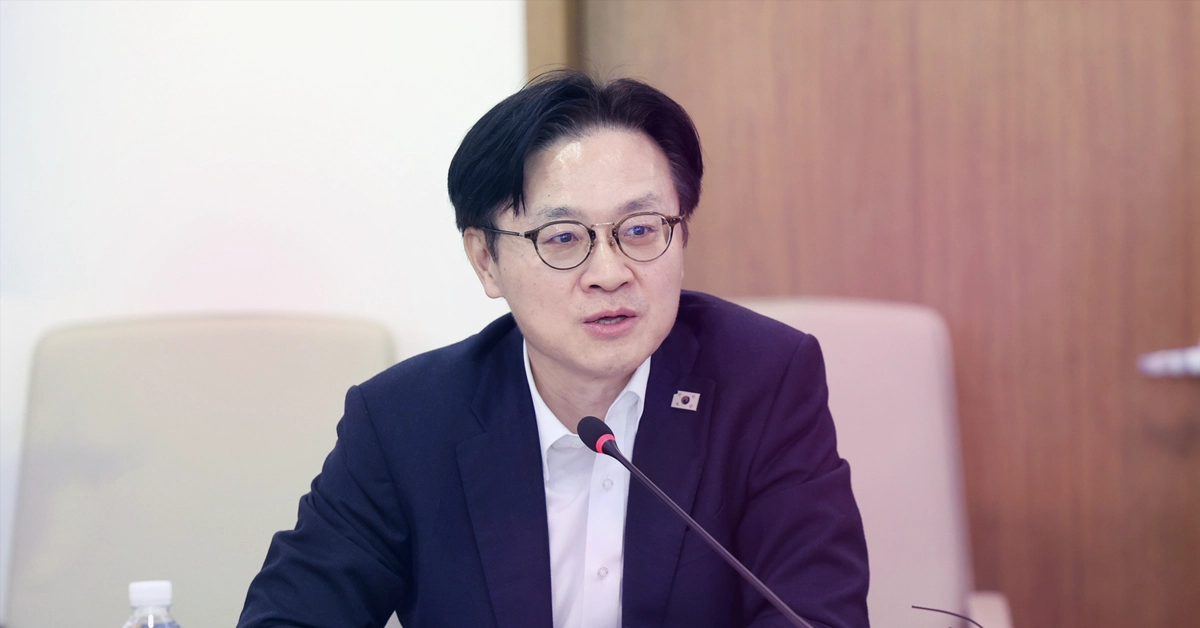
South Korea’s Minister of Trade, Industry and Resources delivered a stark warning to leaders of state-affiliated public institutions, making clear that organisations unable to demonstrate clear, measurable outcomes risk being dismantled. Minister Kim Jung-kwan told executives and staff that public bodies must move beyond passive policy execution and instead operate as innovation-driven organisations that deliver results the public can clearly see and value.
He stressed that institutions failing to justify their existence through performance aligned with public expectations would face closure. The remarks framed the meeting’s core objectives, which focused on eliminating overlapping functions, strengthening accountability frameworks and contributing to regional economic revitalisation. Executives and employees alike were cautioned that stricter discipline would be enforced across institutions.
The message resonated strongly with the audience, which included representatives from public-sector organisations in the resources space. Among them was Kangwon Land, South Korea’s only casino operator legally permitted to accept domestic players. Its inclusion underscored that even entities with exclusive mandates are not exempt from heightened accountability standards.
Kangwon Land Expansion Reflects Performance Expectations
Kangwon Land’s recent strategic actions align with the government’s emphasis on measurable performance. In September 2025, the company secured approval to develop a second casino facility, adding 5,747 square metres of gaming space. The expansion, scheduled to open in 2027, will include 50 gaming tables and 250 electronic machines, positioning the project as a tangible effort to increase capacity and improve returns.
The operator has also benefited from regulatory relaxations introduced in 2025. Authorities increased maximum betting limits for blackjack and hold’em tables to KRW3 million (around $2,295), approved an additional 1,433 square metres of mass gaming space and allowed resident permit holders to participate in gaming. While these measures enhance revenue potential, they also heighten expectations around delivery and performance.
Governance Improvements Reinforce Accountability Push
Kangwon Land’s most recent governance disclosures suggest the company is responding to the government’s message. In late November 2025, it reported achieving 86.7 percent compliance with key governance benchmarks under its 2024 Value-up Plan, with full compliance targeted by 2026. Completed initiatives include the introduction of electronic voting, improved dividend disclosure practices and revisions to dividend policies to enhance predictability.
Further governance enhancements are planned, including earlier shareholder meeting notifications and the formalisation of a CEO succession framework. These steps indicate management awareness that governance standards and shareholder engagement are under increasing scrutiny for public institutions.
Rising Performance Bar for State-Linked Companies
Minister Kim’s remarks reflect growing pressure on state-controlled and state-affiliated entities across South Korea to justify continued support and funding. Tangible results are no longer optional. For Kangwon Land, this means translating regulatory concessions, governance reforms and expansion plans into sustained earnings growth and shareholder value.
The second casino project, set to open in 2027, will be a defining test. Timely delivery, consistent player demand and financial performance will determine whether the investment meets expectations. Failure to execute could carry reputational consequences and undermine future policy support. The minister’s message was clear: public institutions must now prove their relevance through outcomes, not mere continuity.